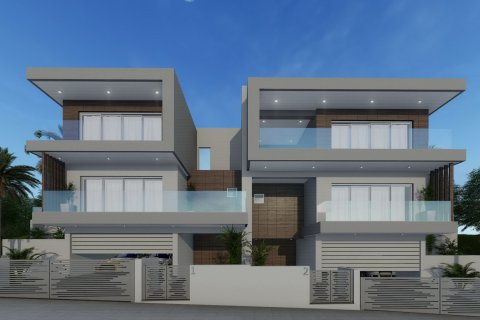
Retiring to Cyprus: how the 2026 tax reform changed the arithmetic

updated

Reading time:

6 min

64

Reading time:

6 min

Retiring to Cyprus: how the 2026 tax reform changed the arithmetic

At the end of July Forbes published its list of the best places to retire abroad — 96 locations across 24 countries — and Cyprus made the cut alongside Portugal, Spain and Italy. Among Cypriot destinations the magazine named Limassol, Paphos, Larnaca and the village of Pyrgos, praising the mild climate, the prevalence of English, low crime and a cost of living roughly a third below the American average. A list, though, is an outside opinion, while the decision to move is made on numbers. And on Cyprus those numbers changed in the retiree's favour on 1 January 2026. Here is what you will pay in tax, what the state health system provides, what income the residence status requires and what daily life costs.

Content:

What changed on 1 January 2026

The tax reform that took effect at the start of the year touched precisely the parameters that matter to someone living on pension income.

  • The tax-free allowance rose from €19,500 to €22,000 a year. Income below that figure is not taxed at all.

  • The bands stretched upwards. The top rate of 35% now begins at €72,000 instead of the previous €60,000.

  • The threshold for the special regime on foreign pensions rose from €3,420 to €5,000. That is the amount above which the flat 5% rate is calculated.

The last point deserves an explanation, because the whole advantage rests on it.

Two systems for taxing a pension: which to choose

Cyprus allows a tax resident receiving a pension from abroad to choose the tax treatment annually. There are two options.

The first is the flat rate. The pension is taxed at 5% on the amount exceeding €5,000 a year. The first five thousand are untaxed and everything above is charged at a single rate regardless of the size of the income.

The second is the ordinary progressive scale. The pension joins total income and is taxed at standard rates: nothing up to €22,000, then 20%, 25%, 30% and 35% as income rises.

The choice is not obvious, and here is where it flips.

Annual pension

Tax under the scale

Tax at the 5% rate

Better option

€18,000

€0

€650

The scale

€24,000

€400

€950

The scale

€27,700

about €1,140

about €1,135

Roughly even

€36,000

€3,000

€1,550

The flat 5%

€50,000

€6,900

€2,250

The flat 5%

The tipping point sits at roughly €27,700 of annual pension, around €2,300 a month. Below that the ordinary scale wins, and on an income up to €22,000 the tax comes out at zero. Above it the flat 5% wins, and the higher the pension the wider the gap: at €50,000 the difference between the two regimes reaches €4,650 a year.

The ability to switch regime every year is rare in Europe, and it is exactly what makes the Cypriot system flexible: income changes, and the optimal option changes with it, note tax advisers working with foreign residents.

One important caveat: the reduced rate applies to pensions earned for services rendered outside Cyprus. Anyone who worked on the island and draws a local pension falls under different rules.

Retiring to Cyprus: how the 2026 tax reform changed the arithmetic

Healthcare: what the state system provides

The Cypriot state health system is called GESY. It runs on contributions, and for a pensioner the rate is 2.65% of the pension. Contributions are calculated on income up to €180,000 a year; anything above that is not charged.

In money terms: on a pension of €24,000 a year the contribution comes to about €636, on €36,000 about €954. That buys access to general practitioners, specialists, diagnostics and hospitals operating within the system.

It is worth keeping in mind that certain visits carry co-payments and some services sit outside the system altogether, covered instead by private insurance. Exact rates and participation conditions are best confirmed directly with the organisation running the scheme, since the parameters are revised periodically.

Status: what Category F means

For a retiree from outside the European Union the main route is the Category F permanent residence permit. It is granted to those with confirmed income from abroad who do not intend to work or run a business on the island.

  • Applicant's income — from €9,568.17 a year.

  • For each dependant — an additional €4,613.22 a year.

  • Source of income — strictly from outside Cyprus: state or private pension, annuities, dividends, interest, rental receipts.

  • Working on the island — not envisaged; the status is designed for those living on passive income.

  • Family — a spouse and minor children are included in the application.

The sums look modest, and honesty is required here: these are established reference figures rather than a guarantee of approval. The authority assesses the application as a whole, including the origin of funds and housing arrangements. Before applying, the amounts and the list of documents should be confirmed directly with the migration department — thresholds are revised from time to time, and processing depends on the department's workload.

An applicant whose pension sits at the minimum threshold should build in a margin: meeting the requirement formally and presenting a convincing application are not the same thing, an expert on the island's property market says.

What living on Cyprus costs

According to Numbeo data for August 2026, a single person spends around €854 a month excluding rent, and a family of four around €3,060. Renting a one-bedroom flat in a city centre costs roughly €1,000 a month.

A useful comparison for anyone benchmarking against European prices: living costs in Cyprus are on average 16.4% lower than in the United Kingdom, and rents 18.7% lower. The British comparison is not incidental — British visitors are the largest group arriving on the island and account for 23% of all airport traffic.

The spread between cities is noticeable. Limassol is the country's most expensive city, with higher rents and higher service prices. Paphos and Larnaca work out considerably cheaper while remaining coastal cities with full urban infrastructure.

Where to settle: figures instead of impressions

Forbes named four Cypriot locations, but the choice between them is better made on specifics. Median new-build prices by district in the first half of 2026 differ by more than double: Paphos €360,000, Larnaca €190,000, Nicosia €185,000, Limassol €302,910. The gap between Paphos and Larnaca is almost twofold for a broadly similar coastal lifestyle.

The second factor is transport. The island has two airports with very different loads: at the height of the season Larnaca handles around 230 flights and 36,000 passengers a day, Paphos 95 flights and 14,000. For a retiree planning regular trips to see children or for medical care, the choice of routes and connections matters more than half an hour of driving.

The third factor is the community around you. In Paphos foreign buyers account for 41.7% of transfers, in Nicosia 9.0%. Where there are many foreigners it is easier to settle in and find a doctor or a service in English; where there are few, life runs closer to the local rhythm, but the language barrier is higher.

Retiring to Cyprus: how the 2026 tax reform changed the arithmetic

The honest drawbacks

  • Long-haul flights only with a connection. Forbes names the absence of direct flights to the United States as a drawback outright. For anyone with family across the ocean this is a permanent cost in money and time.

  • Processing times for the status are unpredictable. Applications move unevenly, so planning a move around a fixed date is unwise.

  • Registering ownership of a new build can drag on. Title to a developer's property is sometimes issued years after occupation — a separate subject worth working through before the deal.

  • Summer heat. From June to September daytime temperatures regularly exceed thirty degrees, and for some older people that is a limitation rather than an attraction.

  • Tax residency needs deliberate handling. The pension reliefs apply to a Cyprus tax resident, and that is a separate status with its own conditions, not the same thing as a residence permit.

Frequently asked questions

How much tax will a retiree on €2,000 a month pay?

On an annual pension of €24,000 the ordinary scale is the better option: the tax comes to about €400 a year, since the first €22,000 are untaxed. Under the 5% flat rate it would be €950. A health system contribution of roughly €636 is payable on top.

Can you work on Cyprus with Category F status?

No, the status is designed for people living on income from abroad. Anyone planning to work or run a business needs a different type of permit.

Do you have to buy property in order to move?

For Category F the key requirement is confirmed foreign income, not a purchase. Owning a home does make proof of residence simpler and removes exposure to rising rents, which is why many people moving over start with a purchase.

Which is better, Paphos or Larnaca?

It depends on priorities. Larnaca has cheaper housing — a new-build median of €190,000 against €360,000 in Paphos — and a markedly busier airport. Paphos has a larger foreign community and a calmer pace.

Does a residence permit automatically grant access to state healthcare?

Access is tied to participating in the system and paying contributions rather than to holding the status itself. The conditions of participation are worth clarifying in advance, before the move.

Comentarios

See also

desde 348 000

111 m²

+ VAT

2 bedrooms desde € 348 000

3 bedrooms desde € 399 000

4 bedrooms desde € 835 000

+ VAT

2024

+ VAT

Este sitio web utiliza cookies para ayudar a ofrecerle la mejor experiencia posible. Estas cookies se utilizan para recopilar información sobre cómo interactúa usted con nuestro sitio web y nos permiten recordarle. Al utilizar este sitio web, usted acepta el uso de cookies para usos analíticos y personalizados.

Detalles