

How a Foreigner Can Get a Mortgage in Cyprus in 2026
Updated
Reading time:
6 min
329
Reading time:
6 min

A foreigner can take out a mortgage in Cyprus, but few banks will agree to it. Most Cypriot banks grant housing loans only to people who live on the island permanently. Bank of Cyprus and Alpha Bank say so directly in their terms.
This article looks at which banks work with foreigners, how much they lend, at what rate and which documents are needed. We calculated all purchase costs, including mortgage-related ones, in our article on how much it costs to buy a flat in Cyprus, and covered the transaction itself in our article on the process of buying property in Cyprus.
Content:
- Which banks lend to foreigners
- How much a bank will lend
- Rates: fixed or variable
- Which documents are needed
- How the application works
- A mortgage on a new build
- If the bank says no
- Who a mortgage in Cyprus may not suit
- What changed in mortgage terms in 2026
- Frequently asked questions
- Find a flat in Cyprus
Which banks lend to foreigners
What matters to a bank is not nationality but where the borrower lives. A British or Israeli citizen with a Cypriot residence permit can apply on the same terms as a Cypriot. Without a residence permit, the choice narrows to one or two banks.
| Bank | Who can borrow for a home | Share of the price | Term and age |
|---|---|---|---|
| Bank of Cyprus | Permanent residents of Cyprus only | 80% for a first home, 70% for a holiday home, 60% for a buy-to-let property | Age at the end of the term up to 65, in some cases up to 70 |
| Eurobank | Holiday home loan — permanent and non-permanent residents of Cyprus | Up to 70% | Up to 25 years, but not beyond the borrower's 65th birthday |
| Alpha Bank | Permanent residents of Cyprus only, loans in euros | 80% for a first home, 70% for other property | Up to 40 years |
| Ancoria Bank | Residents or citizens of Cyprus | 80% for a first home, 65% for a holiday home | 5–35 years, age at the end of the term up to 65 |
| Housing Finance Corporation | Citizens of Cyprus and the EU who have lived on the island for the past 3 years | Up to 75% | Up to 40 years |
Among the major banks, only Eurobank's holiday home loan explicitly accepts borrowers without permanent residence. Even so, it is aimed at people who live in Cyprus, if only temporarily. Whether a bank will lend to a buyer who lives in another country is decided case by case.
Two banks from older guides no longer operate under their own names. Hellenic Bank merged with Eurobank in September 2025, and AstroBank became part of Alpha Bank in October 2025.

How much a bank will lend
The Central Bank of Cyprus sets the upper limit for all banks. For a flat the buyer will live in, the loan can cover as much as 80% of the price, and 70% for other flats. Banks often lend less: Ancoria up to 65% for a holiday home, Bank of Cyprus up to 60% for a buy-to-let property.
The second limit is income. Repayments on all of a borrower's loans may not exceed 80% of their net income, or 65% for a loan in a foreign currency. In practice, banks approve a loan when repayments take up a noticeably smaller share of income.
Example. A holiday flat costs €250,000. The bank lends 60%, or €150,000, and the buyer pays the remaining €100,000. At 4.3% over 20 years, the monthly repayment is about €933; at 5%, about €990.
Rates: fixed or variable
Cypriot banks offer both. A fixed rate is set for several years: 3, 5 or 10 years at Bank of Cyprus and Eurobank; 10, 15, 20 or 25 years at Alpha Bank; 2, 3 or 5 years at Ancoria. After that, the loan moves to a variable rate.
A variable rate has two parts: a base rate and the bank's margin. Each bank chooses its own base:
- Bank of Cyprus uses the European Central Bank's main refinancing rate, which has been 2.65% since 16 September 2026; with a margin of 2.20–2.35%, the rate comes to 4.85–5.00%;
- Alpha Bank uses its own base rate for housing loans;
- Ancoria uses its own base rate or six-month Euribor — the average rate at which European banks lend to each other — which stood at 3.013% on 24 September 2026.
Rates rose in 2026: the ECB raised them twice, in June and in September. With a variable rate, the repayment does not change straight away but on the review date — every 3, 6 or 12 months. According to the Association of Cyprus Banks, a 0.25 percentage point rise on a €100,000 loan with 15–20 years left adds €12–15 a month to the repayment.
For reference: the average rate on loans granted in June 2026 was 3.28%. In September 2026, Ancoria quotes 3.913% for a first home and 4.313% for a holiday home. Most new loans in Cyprus are taken at a fixed rate: 89.1% in the first quarter of 2026.
"If your income is in another currency, I would advise fixing the rate for the longest term the bank offers. You already carry exchange-rate risk, and there is no point adding interest-rate risk to it," says a mortgage broker from Limassol.
Which documents are needed
The bank gives the exact list after the first meeting. It usually includes:
- a passport and proof of address;
- proof of income: payslips, tax returns, bank statements;
- the contract of sale for the flat;
- for a property under construction, a certificate from an architect or engineer on the cost and timing of construction, and the title deed for the land;
- a valuation report prepared by a valuer from the bank's list;
- fire, earthquake and flood insurance for the flat and life insurance for the borrower, both assigned to the bank.
Cypriot banks check credit history with the Artemis bureau. A foreigner can request their own report using a passport: the first request each year is free, and later ones cost €10. If the person has never borrowed in Cyprus, the report will be empty, and the bank will assess them only on their income and documents from their country of residence.
How the application works
- Preliminary decision. Bank of Cyprus gives one online within 24 hours; other banks do so after a meeting and a document check.
- Valuation of the flat by the bank's valuer.
- Signing the loan agreement. At Bank of Cyprus, you can withdraw within 5 working days.
- Registering the mortgage at the Department of Lands and Surveys; the fee is 1% of the loan amount.
- Release of funds: for a resale flat, to the seller in a single payment; for a new build, to the developer in stages as construction progresses.
A mortgage on a new build
When you buy a flat under construction, the bank pays the money in parts as the developer completes each stage of work. While the building is under construction, you can pay only interest without repaying the principal. This grace period lasts up to 2 years at Ancoria and Alpha Bank, and up to 24 months at Bank of Cyprus for holiday homes.
A new build gets its own title deed only once the entire project is finished, sometimes several years later. How the bank secures the loan until then depends on the project and on whether the developer's land is mortgaged. It is worth clarifying this with the bank before signing the contract with the developer.

If the bank says no
If the mortgage is not approved, there are two options.
The first is a developer payment plan. The buyer usually pays 20–30% of the price on signing, then pays in stages during construction and the balance on completion. Some developers offer interest-free instalments for 1–3 years after completion. The terms depend on the project and are set out in the contract.
The second is a loan from a bank in your own country secured on property you own there. In that case the Cypriot flat is bought without a mortgage, and there are no mortgage registration costs.
Who a mortgage in Cyprus may not suit
- Those who live in another country and do not plan to move. Most banks lend only to permanent residents of Cyprus.
- Those with income in another currency and no fixed rate. A repayment in euros will change because of both the exchange rate and the interest rate.
- Those counting on a 20% deposit. For a flat the buyer will not live in, the minimum deposit is 30%, and 35–40% at some banks.
- Those close to 65. The loan must be repaid before that age, so the term will be short and the repayments high.
What changed in mortgage terms in 2026
- The ECB raised rates twice, in June and September 2026. Since 16 September, the ECB's main rate has been 2.65%, and variable rates linked to it have gone up.
- Since the start of 2026, no stamp duty has been charged on loan agreements.
- AstroBank has been part of Alpha Bank since the end of October 2025.
- Demand for loans is growing: in the first quarter of 2026, banks issued €353.6m in new housing loans, 24.5% more than a year earlier.
Frequently asked questions
Can a non-resident get a mortgage in Cyprus?
It is possible, but the choice of banks is narrow. Bank of Cyprus, Alpha Bank and Ancoria lend for housing only to residents of Cyprus. Eurobank also considers temporary residents of the island for its holiday home loan.
What share of the price will a bank lend?
Up to 80% for a flat the buyer will live in and up to 70% for any other flat. The Central Bank of Cyprus sets this limit, and some banks lend less — 60–65%.
What is the mortgage rate in Cyprus in 2026?
The average rate on new loans in June 2026 was 3.28%. In September, Bank of Cyprus's variable rates are 4.85–5.00%, and Ancoria's fixed rates start at 3.913%.
Can I get a mortgage on a new build?
Yes. The bank pays the developer in stages during construction and may offer a grace period of up to 2 years, during which only interest is paid.
Does a credit history from another country count?
Not directly. Cypriot banks check the local Artemis bureau, where a newcomer has no record, so they rely on proof of income and documents from the borrower's country of residence.
Find a flat in Cyprus
Flats in Cyprus and new developments, with filters by price and city, are listed in the Cyprus-Real.Estate catalogue. If you plan to buy with a loan, choose a property with the bank's lending limit in mind.
Popular articles

See also
Development
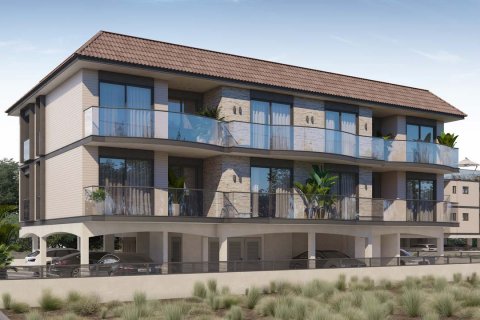
from € 390 000
Comments