

How to Get a Title Deed for a Flat in Cyprus
Updated
Reading time:
6 min
245
Reading time:
6 min
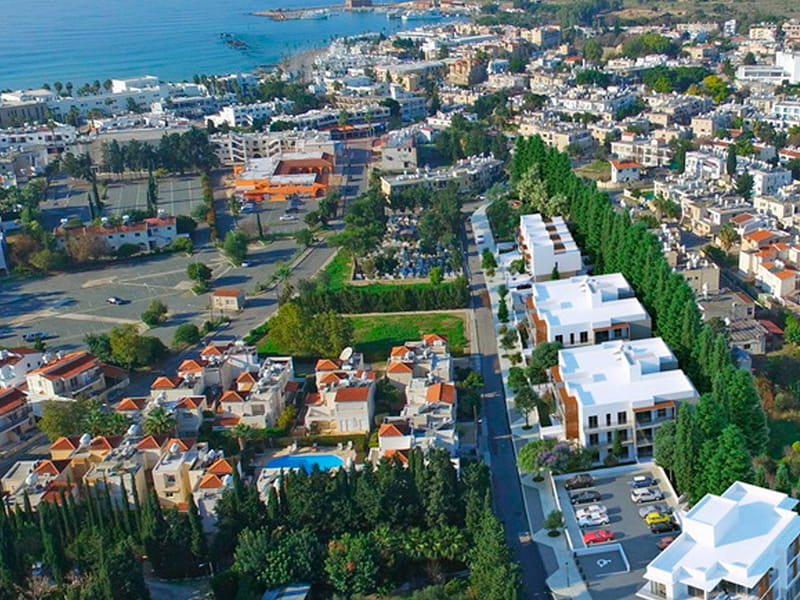
A title deed is the key document for a property owner in Cyprus. Buyers of new builds often wait years for one: the developer can arrange title deeds only after the authorities have approved the whole building. Until the deed is issued, the buyer is protected by a contract registered with the Department of Lands and Surveys.
This article explains how a title deed for a new-build flat is issued, why it gets delayed, how to check a project before buying and what to do if there is no deed. For the purchase itself, see our guide to the process of buying property in Cyprus.
Content:
- Why a title deed matters
- How a title deed for a new-build flat is issued
- Why title deeds are delayed
- How to check a project before buying
- What protects the buyer until the deed is issued
- If the developer has not repaid the bank
- What the paperwork costs
- Who buying without a title deed may not suit
- What changed in 2025–2026
- Frequently asked questions
- Find a flat in Cyprus
Why a title deed matters
Title deeds are issued by the Cyprus Department of Lands and Surveys. A deed records who owns the property and shows any mortgages and restrictions. Until a deed is issued in the buyer's name, the seller or developer remains the formal owner.
With a title deed, an owner can:
- sell the flat through a standard sale rather than by assigning a contract;
- take out a mortgage on it;
- pass it on by inheritance or give it to their children more easily;
- be sure the flat will not be mortgaged or sold without their knowledge.
How a title deed for a new-build flat is issued
For a resale home that already has a deed, the transfer takes place on the day of the sale. With a new build the process is longer, and the developer carries out almost every step:
- The developer obtains planning and building permits and, before work starts, a demarcation certificate from the Department of Lands and Surveys.
- Once construction is finished, the district building authority inspects the building and issues a certificate of approval. If the building deviates from the approved plans, a certificate of unauthorised works is issued instead, and sales of flats in the building are restricted.
- The developer applies to the Department of Lands and Surveys to divide the building into separate units. The application includes the certificate of approval, the permits, a surveyor's plans and the bank's consent if the land is mortgaged.
- The Department checks the documents, carries out a survey and issues separate deeds — first in the developer's name.
- The deed is transferred to the buyer.
There is no official deadline for the whole procedure. If the certificate of approval has been obtained and the land is not mortgaged, issuing the deeds can take a few weeks. If there are irregularities or developer debts, the process can drag on for years.

Why title deeds are delayed
Most often the reason is that the building cannot be approved as it was built. The main causes of delay are:
- Deviations from the permit. Enclosed verandas, pergolas, extra square metres beyond the permitted area.
- No certificate of approval. The developer has not applied or has not dealt with the authority's remarks.
- A mortgage on the land. The developer borrowed against the plot, and the bank will not agree to the division until the debt is repaid.
- Developer debts for taxes and fees.
- Developer insolvency.
- No legal road access. According to the Department of Lands and Surveys, about 1,700 applications for plots without road access were awaiting a decision at the end of 2025.
"Buyers usually ask when they will get the title deed, but the right questions are whether the building has a certificate of approval and whether the land is mortgaged. Without a clear answer to both, nobody can give you a date," says a Limassol lawyer who handles property deals.
How to check a project before buying
Before signing the contract, it is worth ordering a search certificate for the plot from the Department of Lands and Surveys. It shows the owner, mortgages, court charges and restrictions. A basic certificate costs €10 and one showing encumbrances €15; both can be ordered online.
Ask the developer for:
- the planning and building permits with their conditions;
- the approved plans;
- the demarcation certificate;
- the certificate of approval, or information on the stage it has reached;
- confirmation that the application to divide the building has been filed;
- a letter from the bank confirming it will release the mortgage on the specific flat;
- the energy performance certificate.
The contract should oblige the developer to obtain the certificate of approval and arrange the title deed within a reasonable time after completion. We will cover the full list of pre-purchase checks in our article on legal due diligence.
What protects the buyer until the deed is issued
A deposited contract. The law allows six months to register a sale contract with the Department of Lands and Surveys, and the fee is €50. From the moment of registration, the flat can be neither resold nor mortgaged, and the buyer can go to court to have it transferred to them. From December 2023, sellers must add to the contract a certificate listing mortgages and, if the land is mortgaged, a declaration from the lending bank.
Assignment. A flat without a title deed can be sold by handing the new buyer the rights under the contract signed with the developer. Such an assignment is also registered with the Department of Lands and Surveys. The fee is 0.5% of the amount, with a minimum of €50 and a maximum of €3,000.
Loans. A standard mortgage cannot be registered on a flat without its own title deed. A bank may take the buyer's contractual rights as security, but not every bank lends on this basis.
Common expenses of the complex do not affect the transfer. In 2026 a Cypriot court confirmed that unpaid common expenses do not prevent ownership from passing, unless the contract makes their payment a condition of the transfer.

If the developer has not repaid the bank
If a buyer has paid in full but cannot obtain the flat because the developer owes money to a bank, Law 110(I)/2025 applies. It covers contracts registered with the Department of Lands and Surveys no later than 2014.
- A flat that is not mortgaged will be transferred by the Department without the developer's involvement.
- If there is a mortgage, the bank's consent is needed. A refusal without good reason can be challenged in court within 45 days.
The law does not help everyone. It does not cover buyers in buildings with serious breaches of building rules — an estimated 15,000 people.
For minor irregularities, the authorities ran a regularisation scheme in 2024–2025: the owner paid a contribution of €300 to €3,000 and could then obtain a certificate of approval. Applications closed on 23 June 2025, by which time 2,841 had been filed. The state launches such schemes from time to time, so it is worth following the news.
What the paperwork costs
The fees for dividing the building and issuing deeds are paid by the developer. They are small: for example, €5 for each deed per owner.
When the flat is transferred, the buyer pays the property transfer fee. If the flat was bought with VAT, there is no transfer fee. If not, the fee is calculated at 3%, 5% and 8% on different parts of the price and then halved. There has been no stamp duty since 2026. For the buyer's other costs, see the article on how much it costs to buy a flat in Cyprus.
Who buying without a title deed may not suit
- Those planning a quick resale. A flat without a deed can be sold only by assignment, and fewer buyers are interested.
- Those buying with a loan. A standard mortgage is not possible without a title deed.
- Those buying from a developer who cannot show a certificate of approval and a bank letter on releasing the mortgage. In that case, nobody can predict when the deed will be issued.
- Those not prepared to deposit the contract straight after signing. Without this, the buyer is not protected against the flat being resold or mortgaged.
What changed in 2025–2026
- Law 110(I)/2025 was passed for buyers who cannot obtain ownership because of the developer's debts.
- The scheme for regularising minor irregularities closed on 23 June 2025.
- Stamp duty is no longer charged, from the start of 2026.
- In 2026 a court confirmed that unpaid common expenses do not prevent the transfer.
- The Interior Ministry is preparing a reform of the Department of Lands and Surveys: moving about 150 forms online and calculating the transfer fee from the contract price. As of September 2026, the law had not been passed.
Frequently asked questions
How long does it take to get a title deed for a new build?
There is no official deadline. If the building has been approved and the land is not mortgaged, deeds can be issued within a few weeks. With irregularities or developer debts, the wait can stretch to years.
Can a flat be sold without a title deed?
Yes — the rights under the developer contract can be assigned to a new buyer. The assignment is registered with the Department of Lands and Surveys, and the fee is 0.5% of the amount, from €50 to €3,000.
How can I check whether there are title deed problems?
Order a search certificate with encumbrances from the Department of Lands and Surveys — €15 — and ask the developer for the certificate of approval and the bank's letter on releasing the mortgage.
What should I do if the developer does not hand over the title deed?
Check that the contract has been deposited and consult a lawyer. For contracts registered before 2015, Law 110(I)/2025 may help when the developer's bank debt is the obstacle.
Find a flat in Cyprus
Browse flats in Cyprus and new developments on Cyprus-Real.Estate. When choosing a new build, ask the developer what stage the title deeds have reached.
Popular articles

See also
Development
from € 390 000
Comments