
How to Get a Residence Permit in Cyprus in 2026
Updated
Reading time:
12 min
13872
Reading time:
12 min
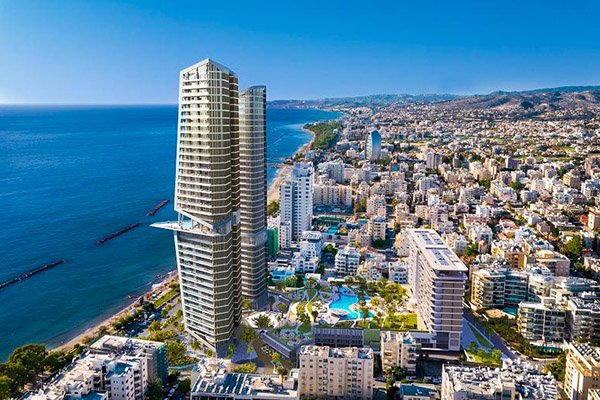
A foreign national can live in Cyprus for longer than 90 days by obtaining a residence permit. There are several routes: income from abroad, employment, remote work, study or buying property. For example, permanent residence is granted to buyers of a new home costing at least €300,000 plus VAT.
In this article we explain how to enter Cyprus today, which types of residence permit exist, what they cost and which documents you need. We also look at residency through property purchase and what may change after the government announced in September 2026 that it will tighten this programme.
Content:
- Visa regime in Cyprus
- Advantages of a Residence Permit
- Residence Visa for Foreigners
- How to Obtain a Residence Permit in Cyprus for Foreigners
- Residence Permit in Cyprus
- Types of Visas in Cyprus
- Documents for Long-Term Visas
- How to Apply for a Resident Visa
- Residence Permit for Investment in Real Estate
- Reasons for Refusal to Issue a Residence Permit
- Embassies of the United States and the United Kingdom in Cyprus
- Who a Cyprus residence permit may not suit
- What changed in 2025–2026
- Frequently asked questions
- Get Permanent Residence in Cyprus With Our Help
Visa regime in Cyprus
Cyprus is a member of the EU but is not yet part of the Schengen area. In May 2026 the European Commission found the country ready to join, but the decision rests with the Council of the EU, and there is no date yet.
You can enter Cyprus on a Cypriot national visa, or without one if you hold:
- a Schengen category C visa valid for two or multiple entries — it allows a stay in Cyprus of up to 90 days in any 180-day period;
- a national D visa or a residence permit of a Schengen or EU country, except the UK and Ireland.
The EU Entry/Exit System (EES) does not yet apply in Cyprus, and passports are still stamped. The authorities are preparing their own system for recording the entry and exit of third-country nationals.
Cyprus also offers a range of visa facilitation options, including programmes for entrepreneurs, investors, and students, which allow obtaining a visa by investing or enrolling in studies.

Advantages of a Residence Permit
The main advantages of a permit are:
- the right to live on the island for more than 90 days without leaving;
- holding a residence permit opens the door to creating and running a business on the island and, in some cases, to paid employment;
- The opportunity of obtaining a quality education;
- Access to a high standard of living in favourable climatic conditions.
Residence Visa for Foreigners
Previously, certain nationalities could obtain a free visa valid for up to 90 days by simply filling out a form, submitting it to the visa department of the Cyprus Embassy of their choice, and receiving a confirmation, which would be stamped upon arrival in the country.
These simplified visas were discontinued in 2022. Today a visa is applied for with a full set of documents at a Cypriot consulate or visa centre. The consular fee is €90 for adults and €45 for children aged 6 to 12; children under 6 pay nothing. Medical insurance must provide cover of at least €30,000.
You can also enter Cyprus on a valid Schengen visa with two or multiple entries.
Nevertheless, this option is unsuitable for long-term stay in the country – you would need to apply for a residence permit in Cyprus.
How to Obtain a Residence Permit in Cyprus for Foreigners
There are several ways for foreigners to obtain a residence visa. We will discuss the existing types of long-stay visas and permits and the benefits of having a Temporary Residence Permit in Cyprus further in this article.
Residence Permit in Cyprus
The temporary residence permit in Cyprus, often called the Pink Slip, is a standard resident card. It is issued on specific grounds, usually for one year, and then renewed. If the passport expires sooner, the permit is issued until three months before the passport's expiry date.
This status has an important limitation: you can return to Cyprus on a valid permit only if you have spent no more than three months abroad. A longer absence risks losing the right to re-enter on the permit and having it cancelled.
Types of Visas in Cyprus
The grounds for obtaining a residence permit include visiting relatives, employment, study and other reasons.
Guest residence permit
A visitor permit allows you to live in Cyprus for one year, with renewal. You cannot work with it — any economic activity is prohibited. This type of permit suits people living on income from abroad, including pensioners.
There are two types of guest residence permit:
- Permit for a financially independent visitor. The main condition is transfers from abroad to a Cypriot account of at least €2,000 a month, or €24,000 a year. The income requirement rises by 20% for a spouse and by 15% for each child. For the first permit at least €10,000 must be deposited in the account, and on renewal at least €6,000 must remain in it.
- Permit for family members of a Cypriot citizen. It is issued to spouses of Cypriots and parents of Cypriot minors. It gives unrestricted access to work, and its maximum term is five years.
Pensioners also have a second option: category F permanent residence. It requires income from abroad of at least €9,568 a year plus €4,613 for each dependant. There are many applications in this category, so processing can take a long time. For more on retiring to the island, see our article on retiring to Cyprus.
Documents for Long-Term Visas
Documents required for a financially independent visitor permit:
- a copy of the passport;
- a copy of the page with the last visa stamp;
- a statement from a Cypriot bank showing transfers from abroad;
- a bank guarantee covering deportation, the amount of which depends on nationality;
- full medical insurance;
- the original and a copy of the marriage certificate;
- a tenancy agreement or proof of ownership of a home in Cyprus;
- proof of stable income from abroad;
- a certificate of no criminal record from the home country (translated and certified);
- medical tests for hepatitis B and C, HIV and syphilis, and a chest X-ray;
- the original and a copy of the birth certificate.
The criminal record certificate and medical tests are required only for the first application.
Cost: €70 for issuing or renewing the permit and €70 for the first registration of a foreign national. The bank guarantee, insurance and legal fees are paid separately. Processing usually takes up to four months and can take longer in practice.
Documents required for a family member of a Cypriot citizen:
- a copy of the passport;
- a copy of the identity card of the Cypriot relative;
- a tenancy agreement if the home is rented, or proof of ownership if it is owned;
- the certificate of marriage to a Cypriot citizen;
- a certificate of no criminal record;
- medical insurance;
- a copy of the page with the last visa stamp;
- the other parent's consent for children from a previous marriage.
The fee is €80 for a permit with the right to work or €50 without it, plus €70 for the first registration. Processing takes up to four months. The receipt for the submitted application has full legal standing and allows you to stay in the country lawfully.
"Most of the time goes not on the review itself but on documents from the home country: the criminal record certificate, the translation and the certification. It is best to order them in advance, before moving — then the application can be filed in the first weeks after arrival," advises a Limassol immigration lawyer.
Work Residence Permit
Employment is one of the most common reasons for moving. Highly qualified foreign staff in Cyprus are hired by companies with foreign capital registered with the Business Support Centre of the Ministry of Energy, Commerce and Industry. The permit is processed within one month and issued for up to three years.
Conditions of employment:
- a degree relevant to the job or at least two years' experience in a similar role;
- a gross salary of at least €2,500 a month;
- an employment contract of at least two years.
Directors and key staff can bring their spouses and minor children. It is possible to change employer within a month if the new employer is also a company with foreign capital. From 2 January 2027, companies will be checked for a 70:30 ratio: at least 30% of new staff must be Cypriot or EU citizens.
Highly qualified employees of such companies can apply for Cypriot citizenship after four years with Greek at B1 level, or after five years with A2.
Digital Nomad Visa
The Digital Nomad Visa has been available in Cyprus since 15 October 2021. It allows freelancers and self-employed people providing digital services to clients and companies abroad to live in the country and work from there.
The permit is issued for one year and can be renewed for a further two. The programme has 500 places, and applications reopened in 2025.
Key points:
- net income of at least €3,500 a month;
- the application is filed within three months of arriving in Cyprus;
- processing takes 5–7 weeks;
- accommodation for the whole stay is required;
- full medical insurance is mandatory;
- all documents must be translated and certified;
- family members may live with the applicant but may not work in Cyprus;
- fees are €70 for the permit and €70 for the first registration.
Startup Support Programme
The startup visa allows foreign entrepreneurs to live in Cyprus and develop an innovative business. The programme has been extended until December 2026, with 150 visas available. Whether it will continue beyond that has not been announced.
Main conditions:
- the founders must hold at least 25% of the company's shares;
- the project must be innovative, with a business plan;
- the permit gives the right to live and work in Cyprus for three years;
- founders' spouses receive the right to work straight away.
The application is first pre-approved by the Deputy Ministry of Research, Innovation and Digital Policy, usually within five weeks. The permit itself is then issued within three weeks. Fees are €120–130 plus €70 for registration. Starting capital requirements are worth checking with a lawyer, as the current programme guide sets no fixed amount.
Student Visa
A Student Visa application is made after successful admission to an educational institution. The university arranges the entry permit, which takes up to a month to process. The consular visa for students is free of charge.
The permit is issued for one year and renewed for each year of study. During term students may work up to 20 hours a week, and up to 38 hours during holidays. After completing a master's degree, graduates can stay in Cyprus for a further 12 months to find work or start a business.
Educational institutions follow the British curriculum, but studying here is cheaper than in the UK.
How to Apply for a Resident Visa
The following documents are required:
- a copy of the passport;
- parental consent for applicants under 18;
- a certificate of no criminal record;
- original medical certificates and test results;
- an official letter of admission from the educational institution stating the duration and content of the course;
- proof of the ability to cover all study and living costs;
- proof of payment of all fees to the educational institution.
After arrival, the student applies for a residence permit and submits:
- medical insurance;
- a letter from a local bank confirming sufficient funds to cover expenses;
- two photos;
- a receipt for the fees — €70 for the permit and €70 for the first registration, or €55 on renewal.
Residence Permit for Investment in Real Estate
Buying property in Cyprus can lead to permanent residence. The current rules of the programme were adopted in May 2023. The permit has no expiry date, and the residence card is issued for ten years. A spouse and minor children can be included.
The advantage of the programme is the absence of the need to relocate. The status is kept if the family settles in Cyprus within a year of approval and is not absent from the island for two years in a row. In practice, this means visiting at least once every two years.
Main conditions:
- an investment of at least €300,000 plus VAT, with at least €300,000 paid by the time of application;
- the funds come from abroad; a loan from a Cypriot bank is not allowed;
- annual income from abroad of at least €50,000, plus €15,000 for a spouse and €10,000 for each minor child;
- a certificate of no criminal record, renewed every three years;
- medical insurance, unless the family is covered by the national health system.
Paid employment is not allowed with this permit. You may be a shareholder and an unpaid director of a company, and a paid director only of the company in which the investment was made.
Children aged 18 to 25 who study abroad apply separately, and the parents need an extra €10,000 of income for each. The investor's parents are no longer included in the programme.

Tightening of the programme
On 24 September 2026 the Deputy Minister for Migration, Nicholas Ioannides, said the government is preparing to tighten the programme. According to him, around 1,500 permits have been issued in two years, and around 12,000 permits issued since 2013 are being checked for compliance with the conditions. Redirecting investment towards education, defence and innovation is under discussion.
For now these are proposals: no new rules or dates have been announced, and the current conditions remain unchanged. In April 2026 MPs were given a different figure — 7,088 permits since 2013 — so estimates of the scale of the review differ. Those who already hold permanent residence should keep their documents in order: proof of the investment, income, insurance and the criminal record certificate.
Where to Invest
Residential real estate:
- a new home bought from a developer on first sale — up to two properties;
- a sale contract registered with the Land Registry, or a title deed;
- proof of payment of at least €300,000 from abroad.
Commercial spaces: suitable for new properties and secondary market properties, including office spaces, hotels, shops, etc.
Other options: shares in a Cypriot company with at least five employees, or units in a Cypriot investment fund.
Important! When investing in housing, it is necessary to prove that the source of income is abroad.
Additional Costs
In addition to the mandatory expenses of €300,000, the applicant should be ready to pay the following fees:
- VAT at 19% on a new home, or 5% if it becomes the main residence and the conditions of the relief are met;
- A fee for submitting the application – €500;
- €70 for registering each family member.
The other costs a buyer faces are covered in our article on how much it costs to buy a flat in Cyprus.
Reasons for Refusal to Issue a Residence Permit
A residence permit may be refused or cancelled for a number of reasons:
- Failure to comply with the requirements of a visa programme;
- no proof of income or of funds in the account;
- the investment is not maintained or is sold without replacement;
- Incorrectly completed paperwork;
- A negative immigration or criminal history of the applicant;
- working without the right to do so — for example, as a visitor;
- too long an absence from Cyprus.
Family members' permits are cancelled together with the main applicant's permit.
Embassies of the United States and the United Kingdom in Cyprus
The US Embassy and the British High Commission are located in Nicosia. They can be contacted in case of loss of documents, conflict with local law enforcement, traffic accidents, or need for emergency medical care.
Who a Cyprus residence permit may not suit
- Those who want to work for an employer on a visitor permit or investment residence. Employment is not allowed with them; a work permit is needed.
- Those planning to spend long periods outside Cyprus on a temporary permit. An absence of more than three months risks losing the permit.
- Those who want to buy a resale home to qualify for permanent residence. Only new homes from a developer count; the resale market is accepted only for commercial property.
- Those who want to include their parents. Since 2023 parents have not been included in the programme.
What changed in 2025–2026
- Since May 2025, companies with foreign capital have been registered by the Business Support Centre.
- In 2025 applications for the digital nomad visa reopened, with a quota of 500 permits.
- The startup visa has been extended until December 2026.
- In May 2026 the European Commission found Cyprus ready to join Schengen; the decision rests with the Council of the EU.
- The consular visa fee rose to €90 for adults.
- In September 2026 the government announced plans to tighten the investment residence programme.
Frequently asked questions
Can you enter Cyprus on a Schengen visa?
Yes, if it is a category C visa valid for two or multiple entries. It allows a stay in Cyprus of up to 90 days in any 180-day period.
How much property do you need to buy for residency in Cyprus?
At least €300,000 plus VAT in a new home from a developer. You also need annual income from abroad of at least €50,000.
Can you work with a residence permit in Cyprus?
It depends on the type of permit. You can work with a work permit or as a family member of a Cypriot, but not with a visitor permit or investment residence.
Will residency through property in Cyprus be abolished?
In September 2026 the authorities announced plans to tighten the programme, but there are no new rules yet. The current conditions still apply.
Get Permanent Residence in Cyprus With Our Help
Cyprus-Real.Estate offers real estate from authoritative developers and trusted individuals. To get a consultation on the issues of moving and obtaining a residence permit, leave a request. If necessary, our specialists will help select a villa in Cyprus, prepare documents, and ensure the legal clarity of the transaction. If you are moving with your family, read also about how to get a family visa to Cyprus.
Popular articles



See also

Development
from € 824 200



Comments