
How to Install Solar Panels in Cyprus in 2026
Updated
Reading time:
6 min
46
Reading time:
6 min
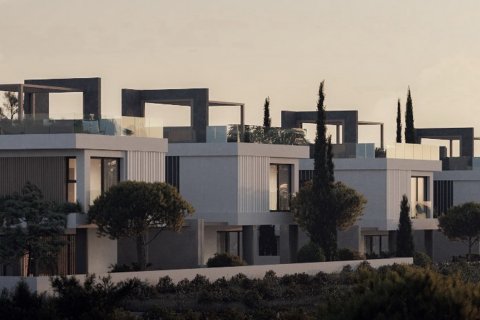
20261007082551.jpg)
Solar panels can be fitted on the roof of a private house in Cyprus without a building permit, provided the system is no larger than 20 kW. From 2026, surplus power that the panels send to the grid is bought at no more than 11 cents per kilowatt-hour, while electricity taken from the grid costs more. So it pays best to use the output in the home. Installers charge around €6,000 for a 4 kW system for a house.
This article covers how the new connection scheme works, what happened to older contracts, which documents are needed, what a system costs and produces, and what to check if the house you are buying already has panels. What makes up an electricity bill is explained in our article on how much utilities cost in Cyprus.
Content:
How the new scheme works
Since 1 January 2026, new home systems have been connected under net billing, where the exchange with the grid is settled in money. The old kilowatt-hour offset scheme, net metering, closed to new applications on 31 December 2025.
Aspect | Net metering (until 2025) | Net billing (from 2026) |
Contract term | 15 years | 10 years |
How surplus is counted | Kilowatt-hour for kilowatt-hour | In money at a regulated price |
Price of surplus | Equal to the purchase price | No more than 11 cents per kWh |
When surplus is lost | Every 36 months | Money balance every 12 months |
Under the new scheme, each bill first compares how much electricity the home drew from the grid and how much it exported. If more was exported, the difference is credited in money to the next bill. Once a year any unused balance is written off without compensation.
"People still install a bigger system out of habit, so they can 'sell' power. Under the new scheme that doesn't work: surplus is worth less than electricity from the grid. Systems are now sized to the home's own use, and anything extra is better sent to a battery or the water heater," says a solar system design engineer in Larnaca.

What happened to older contracts
Around 89,000 homes and small businesses are connected under the old scheme. Their contracts run to the end of their term — 15 years from connection. After that the system can move to the new scheme.
Under old contracts, surplus kilowatt-hours carry over from bill to bill, but every 36 months the balance is written off. The last time this happened was in the February–March 2026 bills.
What size of system is allowed
System size is limited by the distribution system operator's rules:
no more than 80% of the home's authorised load, or up to 100% with a battery or an export limiter;
with a single-phase connection, up to 4.16 kW peak, or up to 5.2 kW with a battery of at least 1 kWh;
a three-phase connection requires a three-phase inverter.
The grid operator may require a device that lets it limit exports remotely, or a setting that stops the system exporting to the grid at all.
How to connect the panels
Design. The installer sizes the system to the home's consumption. The new scheme requires a calculation by an engineer registered with the Cyprus Scientific and Technical Chamber.
Application. It is filed with the district office of EAC's distribution system operator. A decision is made within 30 calendar days.
Installation. After approval, the system must be installed and connected within 60 working days.
Inspection. The grid operator inspects the installation and connects it within 30 days.
Documents you will need:
an electricity bill in the applicant's name;
the title deed, or the owner's consent if the applicant is not the owner;
a topographic plan no more than 6 months old;
a notice that no building permit is required, stamped by the building authority;
equipment specifications and the installer's certificate;
a certificate of fitness for the electrical installation.
Permits for houses and flats
A private house. A rooftop system of up to 20 kW can be installed without planning or building permission. The condition is that the house itself was built with a permit and is not a listed monument. A ground-mounted installation larger than 20 m² needs a permit.
A flat in an apartment building. The roof is common property. Panels can be installed on it for the building's needs with the consent of owners holding 75% of the shares, provided the installation does not stop the others from using their property. Residents of one building can also agree to share the output.
What it costs and what it produces
Installer prices for 2026:
System size | Installed price |
3 kW | €4,800–5,800 |
4 kW | €5,700–6,700 |
5 kW | €6,500–7,500 |
A battery costs roughly €300–400 per kilowatt-hour of capacity.
How much 1 kW of peak capacity produces a year, according to European Commission estimates:
Town | kWh per year |
Limassol | 1,714 |
Paphos | 1,709 |
Larnaca | 1,669 |
Nicosia | 1,632 |
Here is a sample calculation. A 4 kW system in Limassol produces about 6,850 kWh a year. If the household uses half and exports half, the saving is about €1,200 a year: roughly €850 from not buying electricity at 25 cents, and about €380 for surplus at 11 cents. A €6,000 system would then pay for itself in about five years. The more of the output the home uses, the faster the payback.
Why the grid does not always take the output
On sunny days Cyprus generates more electricity than the grid can absorb, and in spring and winter it can take less than in summer. The operator then limits exports in turn: large solar parks first, then smaller systems, including home rooftops. In practice most of the curtailment so far has fallen on the large parks.
Central storage should ease the situation, with start-up expected in summer 2027. In addition, Cyprus is upgrading substations with €95 million by the end of 2029.

Subsidies
The "PV for All" scheme is closed: applications were accepted until 31 December 2025. As of September 2026 there is no separate subsidy for household solar panels.
The 2026 home energy upgrade scheme. It covers panels, batteries and solar water heaters together with insulation. The conditions: the home was connected to the grid before 2008, and the works cut energy use by at least 60%.
Solar water heaters. The Renewable Energy Fund gives €500, or €900 in mountain areas and for vulnerable households. Approval must be obtained before work starts.
What to check if panels are already fitted
The EAC contract. Which scheme the system is on and when it was connected. The connection date tells you how many years the contract has left.
Installation documents. The electrical installation certificate, the grid operator's inspection record and the notice that no building permit was required.
A transfer without interruption. If the electricity account is moved to the new owner without cutting the supply, accumulated surplus is kept. If the supply is interrupted, it is lost.
Condition of the equipment. The age of the panels and inverter, and whether there is a warranty.
Other documents worth checking before the deal are covered in our article on how to check a flat in Cyprus before buying.
Who may not recover the cost
Owners who spend only part of the year in Cyprus. While the house is empty, output goes to the grid at 11 cents, and the money balance is written off once a year.
Households that use little electricity. The less of the output the home uses, the longer the payback.
Flat owners whose neighbours object. Without the consent of owners holding 75% of the shares, panels cannot go on the shared roof.
Owners of a house without a building permit. Such a roof cannot take a system without separate permission.
What changed in 2025–2026
Since 1 January 2026, new systems have been connected only under net billing, with a 10-year contract.
The "PV for All" scheme ended at the close of 2025.
In February–March 2026, owners on the old scheme had their 36-month surplus written off.
In 2026 a home energy upgrade scheme and a new solar water heater subsidy were announced.
In August 2026 a €95 million substation upgrade was approved.
Frequently asked questions
Do you need a permit for solar panels in Cyprus?
For a system of up to 20 kW on the roof of a house built with a permit, no building permit is needed. A notice stamped by the building authority is submitted to the grid operator.
What price is paid for surplus electricity?
Under the new scheme, a regulated price of no more than 11 cents per kilowatt-hour. The money is credited to the next bill.
Can panels be installed if you own a flat?
Yes, on the shared roof with the consent of owners holding 75% of the shares in the building.
Are there solar panel subsidies in 2026?
There is no separate subsidy for households. Panels can be included in the home energy upgrade scheme together with insulation.
Find a house in Cyprus
If you plan to fit solar panels, choose a house with a south-facing roof and a building permit. Suitable villas in Cyprus and new developments with generous roofs are in the Cyprus-Real.Estate catalogue.
Popular articles

See also
Verified property
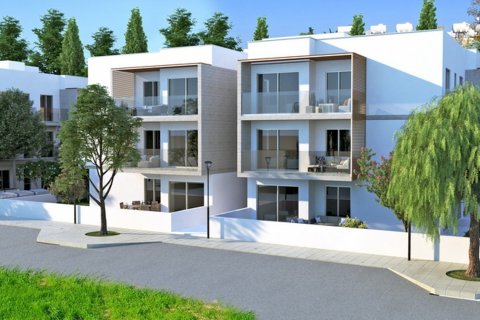
Development
from € 370 000





Comments